In 2010 I finished my Master of Science in Mass Communication & Media Arts at Southern Illinois University Carbondale with a research project called The Free Culture Project: using free software as a gateway to educate Digital Natives about free culture to promote an open and free society. My advisor was Professor Robert J. Spahr.
The idea came from Lawrence Lessig’s description of the 20th century as a “read-only” culture, where people consumed media but rarely made it. Cheap cameras, computers and the Internet were bringing back a “read-write” culture, where anyone can create, share and remix. At the same time, copyright law was reaching further than ever into what ordinary people, and especially kids, do online. I wanted to show children that they could be creators of culture, not only consumers, and that free software and free resources were a great place to start.
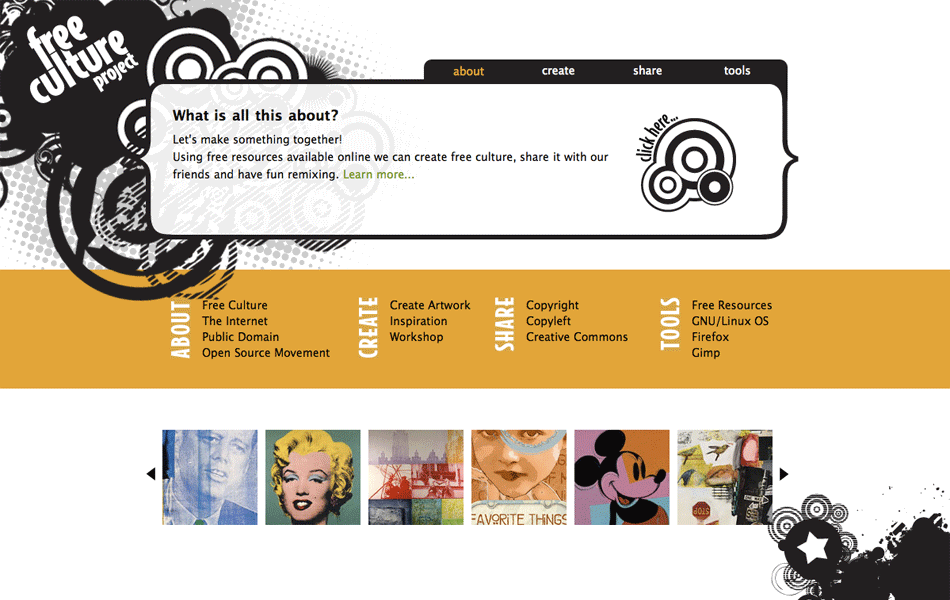
The project had two parts: a website and a series of workshops. The website, with its About, Create, Share and Tools sections, explained free culture, the Internet, the public domain, copyleft and Creative Commons, and collected free software and public domain resources. The workshops followed four steps: create, share, remix and publish.
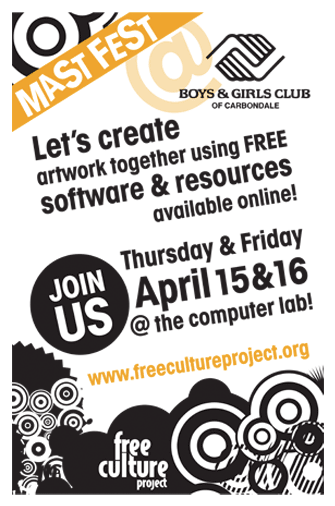
The first workshops were part of the Math, Arts, Science & Technology (MAST) Festival of the Boys & Girls Club of Carbondale: ten children aged 10 to 15, in two sessions of two hours at the university’s New Media Center. Each child got a USB drive with Puppy Linux and Gimp, so they could keep using free software at the club’s computer lab. The challenge was to tell a story as a digital collage using public domain images. Along the way we talked about copyright, copyleft and fair use, with real examples like Shepard Fairey’s Obama “Hope” poster.
It was harder than I expected. With the whole web a click away, keeping everyone focused was a challenge, and learning the software took longer than planned, so we never got to the share and remix steps. But the project-based approach worked: the kids were engaged, they asked great questions, and four of them volunteered to teach the others their favourite Gimp tools. That willingness to share was, in no small part, the success of the workshops.
I also ran an anonymous usability test of the website with 14 people. Their feedback led to clearer navigation, like adding a side menu to the inside pages so you never have to go back home to find your way.
My conclusion was not to abolish copyright, but to bring it back into balance with the public good, and to teach it through making things rather than through fear. The goal was simple: help kids move from passive consumers of mass media to active producers, and responsible citizens of the digital world.