In 2015 I took the Fab Academy at Fab Lab Barcelona. The Fab Academy is a distributed digital fabrication program from MIT’s Center for Bits and Atoms (CBA), directed by Neil Gershenfeld, and based on his MIT course How to Make (Almost) Anything. Every week Neil taught a new topic to students in Fab Labs all over the world by video, and every week we had to make something with it in our own lab, and document it all on our own website.
It was intense: from January to June, nineteen modules, one after another:
- Principles, practices & project management
- Computer-aided design
- Computer-controlled cutting
- Electronics production
- 3D scanning & printing
- Electronics design
- Embedded programming
- Computer-controlled machining
- Molding & casting
- Input devices
- Output devices
- Composites
- Networking & communications
- Interface & application programming
- Applications & implications
- Mechanical & machine design
- Invention, intellectual property & income
- Project development
- Final project presentation
Each week’s work is documented on my Fab Academy 2015 website, archived at fabacademy.org (I studied under my Spanish name, Mariona Aloy Ciller).
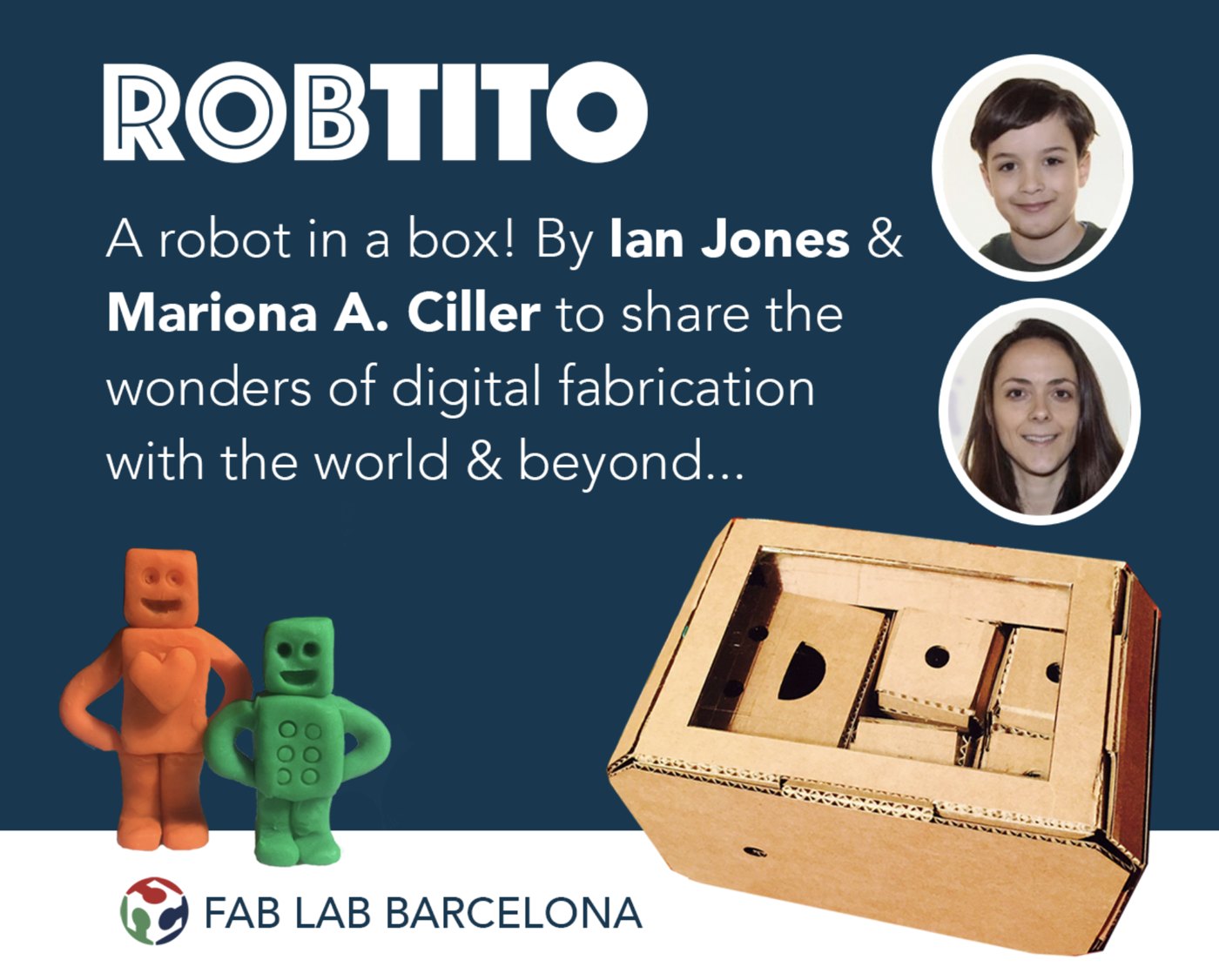
For my final project I set myself a challenge: create a mini Fab Academy curriculum that a seven-year-old could follow. Every module became a step towards building one robot, designed by my son Ian. That robot is Robtito: a robot in a box, made with clay, 3D modelling, laser-cut cardboard and electronics, to share the wonders of digital fabrication with the world & beyond. The idea was to turn the documentation into a little Fab Academy book, packed together with a sample robot.
The Fab Academy changed the way I think about learning: learn by doing, document everything (especially what went wrong) and share it so others can build on it. That spirit shaped much of what I did next, from Maker Faire Barcelona to STEAMConf and MESH.